
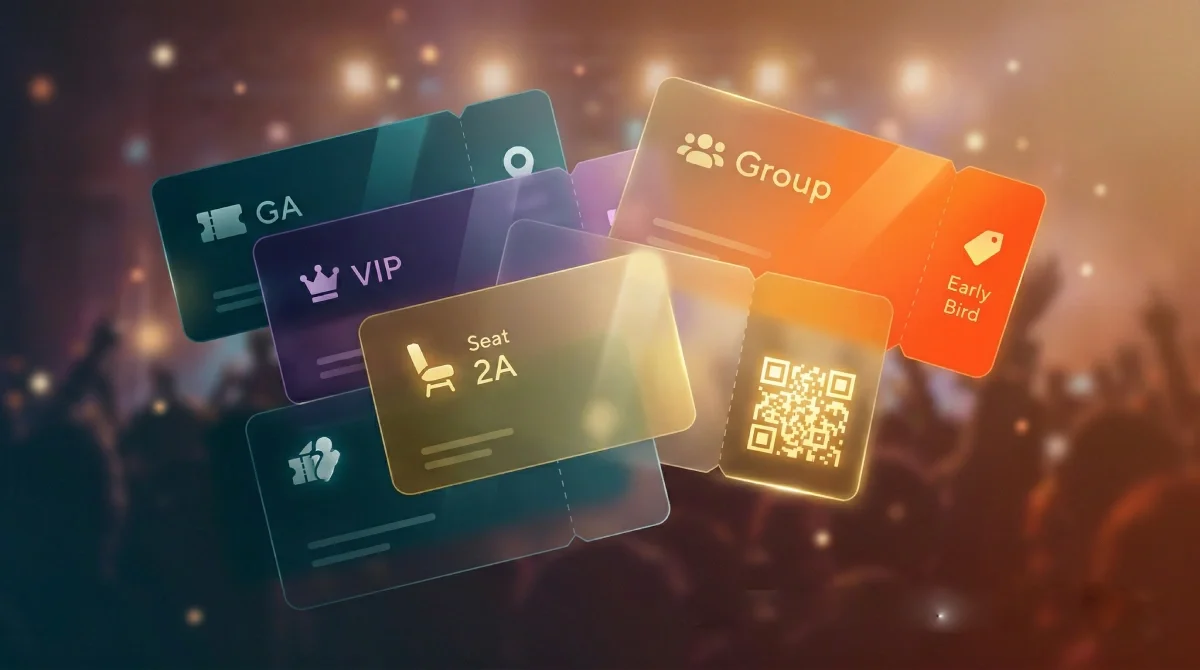
Event tickets shape the entire attendee experience, from the moment someone decides to buy to the second they walk through the door. The types of tickets you offer affect your pricing strategy, how smoothly check-in runs, and how much revenue your event generates. FreshTix makes it easy to set up and manage every ticket type covered in this article, all from one platform.
In this article, we break down 21 types of event tickets, how each one works, and when to use them so you can build a ticketing strategy that fits your event and your goals.
Primary Event Ticket Types
Primary event ticket types are the foundation of any ticketing setup. Knowing your options makes it easier to build the right mix from the start.
1. General Admission Tickets
General admission tickets provide entry to an event without an assigned seat. Attendees choose where to stand or sit once they arrive, making this the most straightforward ticket type to set up and manage. Our guide on general admission tickets breaks down how to structure this ticket type for your event.
-
Best for: Festivals, open venues, standing-room concerts, and casual events
-
Benefit: Simple setup, faster check-in, and lower per-ticket management overhead
2. Reserved Seating Tickets
Reserved seating tickets assign a specific seat to each attendee at the time of purchase. Attendees know exactly where they are sitting before they arrive, which adds comfort and confidence to the buying decision. The FreshTix reserved seating tool lets you build custom seating charts that fit your venue's exact layout.
-
Best for: Concerts, theaters, auditoriums, and conferences
-
Benefit: Better attendee experience and more control over seat-based pricing tiers
3. VIP Tickets
VIP tickets include perks or access that go beyond a standard entry ticket. This can mean front-row seating, access to a private lounge, early entry, or exclusive merchandise bundles.
-
Examples: Front-row seating, VIP lounges, early entry, exclusive merchandise
-
Benefit: Higher revenue per attendee and a stronger overall event experience
Pricing Strategy Ticket Types
Pricing strategy ticket types let you control how and when attendees buy. The right mix can drive early sales, reward loyal buyers, and help you maximize revenue without changing your public price.
4. Early Bird Tickets
Early bird tickets are discounted tickets sold during a limited window before general ticket sales begin. They reward attendees who commit early and give organizers a cash flow boost well ahead of the event date. For a closer look at how to use this approach, our guide on early bird pricing covers timing, discount structures, and how to maximize your on-sale period.
-
Benefit: Drives early momentum, improves cash flow, and builds pre-event buzz
5. Tiered Pricing Tickets
Tiered pricing means ticket prices increase as inventory sells down or as the event date gets closer. Each pricing tier is set in advance, so the structure is transparent to buyers and easy to manage on the back end. For a closer look at how presale and general sale pricing work together, our breakdown of presale vs general sale is a helpful starting point.
-
Benefit: Maximizes revenue based on demand without requiring manual price changes
6. Group Tickets
Group tickets offer reduced pricing when a set number of tickets are purchased together in a single transaction. They work well for events where attendees are likely to arrive with coworkers, families, or organized groups. At FreshTix, we support group ticket discounts directly through the platform, making it easy to set minimums and apply pricing automatically.
-
Best for: Corporate events, school groups, and family-friendly festivals
-
Benefit: Encourages bulk purchases and increases total tickets sold per order
7. Discount and Promo Code Tickets
Discount and promo code tickets use a unique code to unlock special pricing at checkout. They are a practical tool for targeted promotions, influencer partnerships, and sponsor-driven campaigns.
-
Use cases: Influencer promotions, sponsor partnerships, email list discounts, and targeted outreach
-
Benefit: Drives ticket sales through specific channels without changing your public pricing
8. Student and Special Access Tickets
Student and special access tickets offer reduced pricing for specific groups such as students, seniors, or military members. They require a qualifying credential and are typically verified at the door.
-
Benefit: Expands your audience reach and makes your event more accessible to a wider range of attendees
Access and Experience-Based Ticket Types
Access and experience-based tickets go beyond standard entry. They define where attendees can go and what they can do, giving you a straightforward way to tier your event and offer something for every budget.
9. Backstage Pass and Meet-and-Greet Tickets
Backstage pass and meet-and-greet tickets include exclusive behind-the-scenes access or direct interaction with performers. These are typically sold in very limited quantities and priced well above general admission.
-
Benefit: Creates a high-value experience that drives strong demand and supports premium pricing
10. All-Access Passes
All-access passes provide entry to multiple areas, sessions, or experiences within a single event. They are common at multi-stage festivals and multi-track conferences where different programming runs simultaneously.
-
Best for: Conferences, multi-stage music festivals, and trade shows
-
Benefit: Simplifies the purchase decision for attendees who want the full experience
11. Multi-Day Passes
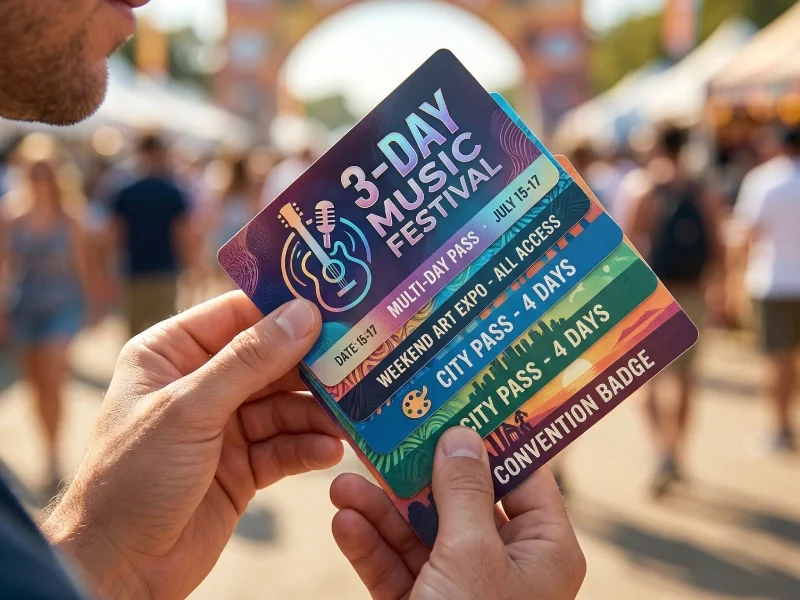
Multi-day passes allow attendees to access an event across more than one day under a single ticket purchase. They are priced at a discount compared to buying individual day tickets separately.
-
Benefit: Simplifies ticketing for multi-day events and encourages longer attendee commitment
12. Bundle and Package Tickets
Bundle and package tickets combine multiple event admissions into a single purchase, often at a reduced rate. This is common for theater seasons, concert series, and venues running recurring programming. Our season ticket tool makes it straightforward to set up and sell bundled packages for venues of any size.
-
Best for: Theater seasons, concert series, and recurring venue programming
-
Benefit: Increases upfront revenue and builds loyalty among repeat attendees
13. Add-On Tickets
Add-on tickets are optional purchases attached to a primary ticket at checkout. They let attendees customize their experience while giving organizers a straightforward way to increase average order value. With FreshTix, ticketing add-on fees belong entirely to you, with 100% of that revenue going directly to your bottom line.
-
Examples: Parking passes, merchandise, food and drink packages, coat check
-
Benefit: Increases revenue per transaction without raising the base ticket price
Ticket Format Types
Ticket format refers to how a ticket is delivered and validated at your event. Choosing the right format affects check-in speed, attendee convenience, and how your staff manages entry on event day.
14. Mobile and E-Tickets
Mobile tickets are digital tickets delivered to an attendee's email or smartphone immediately after purchase. Attendees can access them from any device, and our mobile tickets are fully scannable using the free Ticket Scanning App on iOS and Android. The app even lets you assign color-coded scan responses by ticket type so your staff can spot general admission versus VIP at a glance.
-
Benefit: Fast delivery, convenient for attendees, and easy to scan at entry
15. QR Code Tickets
QR code tickets use a scannable code to validate entry at the door. The QR code is embedded in the ticket, whether digital or printed, and is read instantly by a scanning device. For a full look at how scanning works across ticket formats, our guide on the best mobile ticket scanning apps walks through the options in detail.
-
Benefit: Faster check-in, built-in fraud protection, and real-time scan tracking
16. Physical and Printed Tickets
Physical tickets are traditional paper tickets used for entry. While digital formats have become the norm, some events and audiences still prefer a tangible ticket. At FreshTix, we support print-at-home options so attendees can produce their own paper tickets when needed, and the free Ticket Scanning App reads both PDF barcodes and multiple ticket scan formats without any additional hardware.
-
Best for: Formal events, older audiences, and venues with limited mobile connectivity
-
Benefit: Familiar format that works for attendees who prefer an offline ticketing experience
Operational and Advanced Ticket Types
Not all tickets fit neatly into a standard format. These operational ticket types give you more control over access, capacity, and the attendee experience.
17. Waitlist Tickets
Waitlist tickets allow interested attendees to register for a spot in line when an event is sold out. If tickets become available due to cancellations or added capacity, waitlisted attendees are notified and given the opportunity to purchase.
-
Best for: High-demand events, sold-out shows, and festivals with capacity limits
-
Benefit: Captures interested buyers who would otherwise be lost and helps fill last-minute vacancies
18. Transfer and Resale Tickets
Transfer and resale tickets allow an original ticket holder to pass their ticket to another person. A clear transfer policy protects both organizers and attendees from confusion and unauthorized resale. Our articles on verified resale tickets and preventing ticket scalping are worth a read before you finalize your transfer rules.
-
Benefit: Adds flexibility for attendees and reduces the appeal of third-party scalping
19. Day-Specific Tickets
Day-specific tickets grant access to one particular day of a multi-day event. Unlike a multi-day pass, they are purchased for a single date and priced accordingly. They give attendees who cannot commit to the full event a lower-cost entry point.
-
Best for: Multi-day festivals, fairs, and conferences with distinct daily programming
-
Benefit: Broadens your potential audience by making partial attendance an affordable option
20. Donation-Based Tickets
Donation-based tickets, sometimes called pay-what-you-want tickets, allow attendees to choose how much they pay, often with a minimum floor price set by the organizer. They are well suited for community-driven events where accessibility is a priority.
-
Best for: Fundraisers, nonprofit events, and community gatherings
-
Benefit: Removes price as a barrier to attendance while still generating revenue
21. Complimentary Tickets
Complimentary tickets, or comp tickets, are free tickets issued at the organizer's discretion to staff, sponsors, press, or special guests. Free events on FreshTix are always free, meaning there are no platform fees applied to complimentary tickets.
-
Benefit: Supports relationship building, press coverage, and sponsor fulfillment without added cost

How to Choose the Right Types of Tickets for Your Event
Choosing the right ticket mix depends on your event format, your audience, and what you want to earn. Most events benefit from combining two or three ticket types rather than relying on a single option. Start with your entry-level ticket, then layer in pricing tiers, access upgrades, or add-ons based on what your attendees are likely to want.
Key factors to consider:
-
Event size and format (general admission vs. reserved seating)
-
Audience segments (VIPs, groups, students, first-timers)
-
Revenue strategy (tiered pricing, upsells, add-ons)
-
Check-in logistics (mobile vs. physical tickets)
-
Event duration (single-day vs. multi-day)
Benefits of Offering Multiple Ticket Types
Offering more than one ticket type gives you more ways to serve different attendees and more opportunities to increase revenue per transaction. A well-structured ticket mix also makes your event feel more professional and organized to buyers.
Using multiple ticket types helps organizers:
-
Maximize revenue through pricing flexibility
-
Improve attendee experience with tailored access levels
-
Segment audiences more effectively
-
Increase conversions with better purchase options for different budgets
-
Capture more revenue through add-ons and upgrades
Common Mistakes to Avoid When Creating Ticket Types
Clear, intentional ticket structure from the start saves a lot of headaches on event day. Even experienced organizers run into the same avoidable problems when setting up their ticket offerings.
-
Offering too many options without clear differences between them
-
Not explaining what each ticket tier includes
-
Ignoring mobile ticketing and check-in efficiency
-
Missing upsell opportunities through add-ons and VIP upgrades
-
Setting up day-specific and multi-day pass pricing without a clear discount incentive
Frequently Asked Questions
What is the most common type of event ticket?
General admission is the most widely used ticket type because it is simple to set up and works for most event formats.
What ticket types generate the most revenue?
VIP tickets, tiered pricing, and add-ons typically produce the highest revenue per attendee.
How many ticket types should an event have?
Most events work well with three to six ticket types, which balances simplicity for buyers with enough options to reach different audience segments.
What is the difference between general admission and reserved seating?
General admission allows entry without an assigned seat, while reserved seating assigns each attendee a specific seat at the time of purchase.
Build a Ticket Strategy That Maximizes Sales and Experience
The right mix of ticket types does more than fill seats. It shapes how attendees feel about your event before they ever arrive and gives you the pricing flexibility to reach more people at more price points. FreshTix makes it easy to set up every ticket type covered in this article, all from one platform with transparent pricing and no surprise fees. Get started free today and sell tickets online with the tools event organizers actually need.
FreshTix vs. TicketLeap: Comparison for Event Organizers (2026)